PetowoPetowo
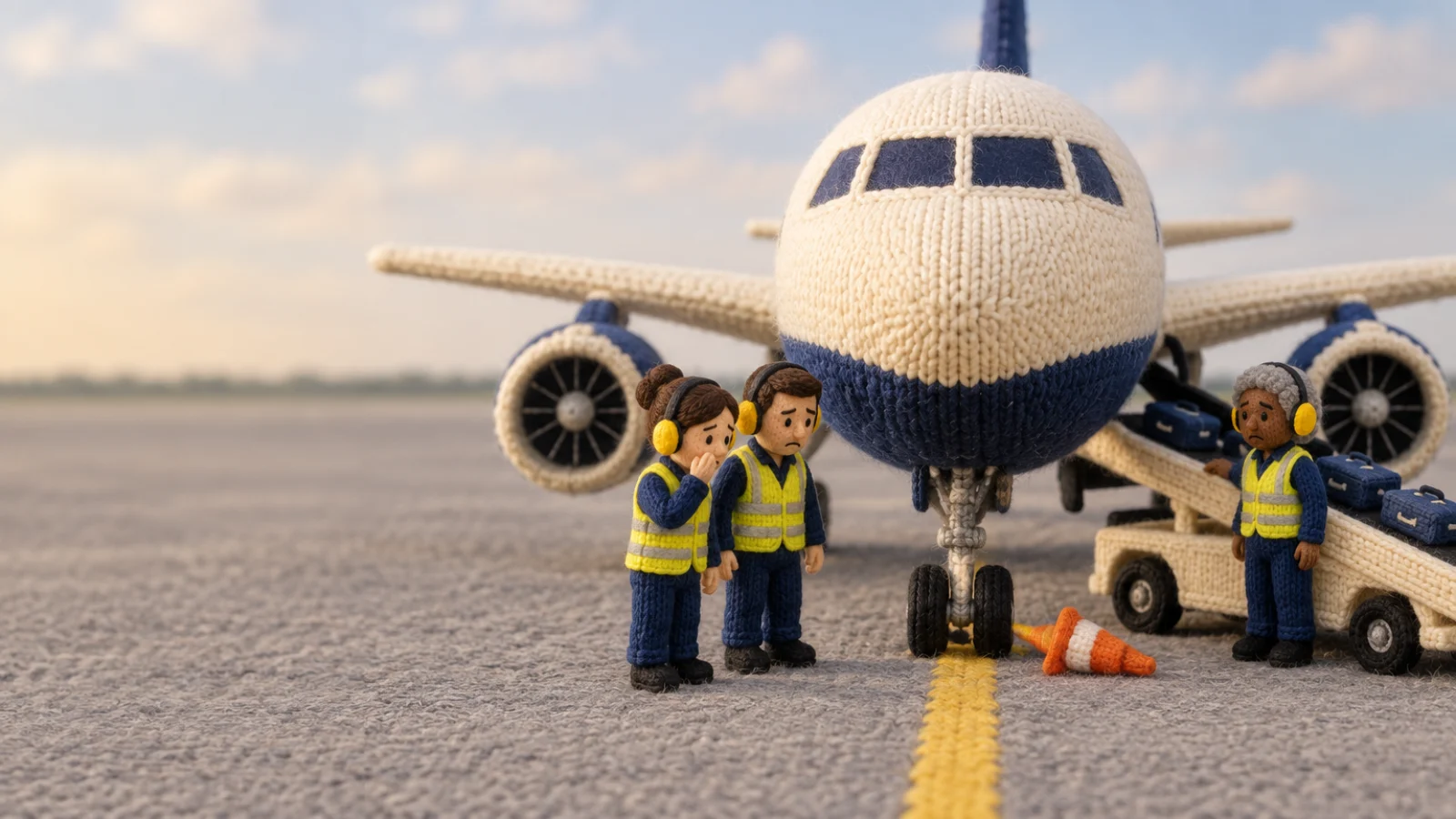
A knitted-wool illustration of an aircraft on the ramp. The nose wheel has no chocks and a traffic cone lies knocked over. A tug driver and two ground staff in ear defenders look on, worried.

Industries / Aviation

Turn a ramp near miss into a fix someone has checked.

For ground handlers, airports and airline operations. Report from the ramp and follow every action to a checked close.

  • Anyone can report from their phone

  • See which controls are really working

  • Fixes are checked before they're closed

  • Your information stays private to you

The problems you know

Does any of this sound familiar?

  • The turnaround

    No time. The next flight's on stand.

    A missed chock or a clipped belt loader gets a word on the radio. Then the aircraft is away and so is the memory of it.

  • Nobody hurt

    Nothing happened, so nobody wrote it up.

    The near misses on the ramp are the ones you most want to hear about. They are also the ones most likely to be left out.

  • Station by station

    Every station does it differently.

    Handlers, airlines and airports each keep their own records. Comparing one station with another turns into an argument about the numbers.

From the stand to a checked close.

  • The turnaround

    Report it between flights

    A ramp agent reports it at the stand, in their own words, and the aviation set-up asks for the flight and the consignment. Before it goes, the report reads back and shows who supplied each part.

    On a phone, the Check and send screen of a near-miss report, scrolling through the parts, each marked You or Suggested by Petey.

    Before it goes, the whole report reads back, each part marked yours or Petey's.
  • Nobody hurt

    Graded by what could have happened

    An unchocked aircraft with no damage is still worth a look. Grade a near miss by the energy involved and the worst it could have been, and a person can always grade it differently.

    An investigator opens a forklift near miss and its severity review: motion energy, struck by a moving vehicle, directly exposed, the barrier degraded, and Petowo computing it as a potential serious injury, which the person can grade differently.

    A near miss is graded by what could have happened, not by luck.
  • Nobody hurt

    Closed means checked

    Each fix has one owner and one due date. When the work is done, someone who neither owns it nor did it checks it before it closes, so a new procedure and a new chock store are both seen through.

    The actions list, then one action that is closed only after an independent verification step done by someone other than its owner.

    Closed means checked, by someone who did not do the work.
  • Station by station

    Every station on one dashboard

    Share a dashboard with your station managers. Each person sees the stations their access allows, so the same record can be read across the network.

    A site manager opens Analytics, chooses Shared with me, and opens the Site safety this quarter dashboard with its charts.

    Share a dashboard with a group. Each person sees what their access allows.
  • Your words, your sites

    Aviation has a ready-made set-up. It asks for the flight and the consignment, and brings aviation event types: aircraft damage, dangerous goods, cargo damage, physical security and flight safety. Name your stations, stands and handlers your way. Rename, reorder or retire any of it, and an update never overwrites your changes.

What people ask us

Does it know about flights?

The aviation set-up adds the flight and the consignment to the report, so a ramp event carries them. Rename, reorder or retire any of those questions. Flights belong to this set-up only, and a handler with other work is free to set those events up differently.

Can our handling agents report?

Yes. Invite them as guests, and guests are free with no limit. They sign in with a six-digit code sent to their email. You decide who is invited, and nobody can sign themselves up.

Does Petowo file our occurrence reports?

No. It has no flow for any regulator, so you still file those yourself. Petowo keeps the record of the event, what was found and what was done about it.

Can people report without giving their name?

No. Each report comes from an invited person who has signed in. A case can be marked as confidential, so only the case team, the people named on it and administrators can read it.

Can we work with hangar permits as well?

Yes. Work at height is one of the permit types Petowo comes with, with its own conditions and a rescue plan. The people who sign hold that duty and its training.

The same knitted-wool aircraft with yellow chocks on the nose wheel and a row of upright cones. The tug driver and two ground staff smile and give a thumbs up.

Chocks in. Cones out. Thumbs up.

Bring a recent ramp event, and we will walk it through Petowo with you.